Contents
- 1 What to Check Before Choosing the Best Credit Card in India
- 2 Best Credit Cards in India 2026 — Top Picks by Category
- 2.1 1. Amazon Pay ICICI Credit Card — Best for Online Shopping
- 2.2 2. Axis Ace Credit Card — Best for Everyday Cashback
- 2.3 3. SBI Cashback Credit Card — Best for Beginners and Online Spenders
- 2.4 4. HDFC Millennia Credit Card — Best All-Rounder for Young Professionals
- 2.5 5. Swiggy HDFC Bank Credit Card — Best for Food Delivery and Dining
- 2.6 6. Airtel Axis Bank Credit Card — Best for Telecom and Digital Spending
- 2.7 7. Kiwi RuPay Credit Card — Best for UPI Payments in 2026
- 3 Best Credit Cards in India 2026 — Comparison Table
- 4 How to Maximise Value From Your Credit Card in India
- 5 Credit Card vs Debit Card vs UPI — Which Should You Use?
- 6 What CIBIL Score Do You Need to Get a Credit Card in India?
- 7 Conclusion — Pick One Card That Matches Your Spending, Use It Wisely
- 8 Frequently Asked Questions
- 8.1 Which is the best credit card in India in 2026 for a beginner?
- 8.2 Is it safe to have two or three credit cards in India?
- 8.3 Does applying for a credit card affect my CIBIL score?
- 8.4 What happens if I only pay the minimum due on my credit card?
- 8.5 Which credit card gives the best cashback on UPI payments in India?
- 8.6 Can I get a credit card with a low CIBIL score in India?
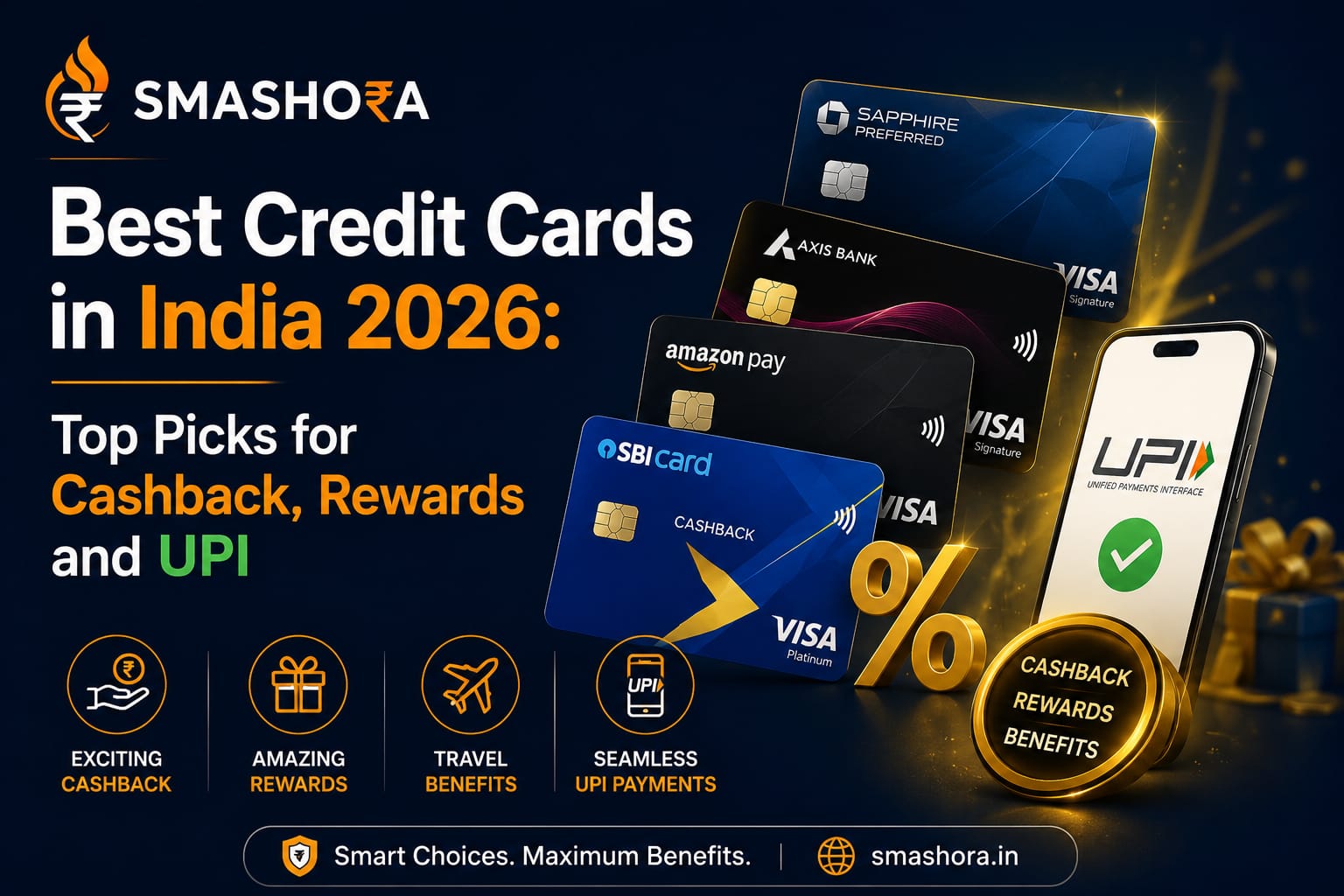
Finding the best credit cards in India in 2026 is not as simple as picking the one with the highest advertised cashback rate. The right card depends entirely on how you spend your money every month. A card that is perfect for someone who orders food on Swiggy every day may be completely wrong for someone who spends most of their money on fuel and grocery stores. Getting this match right can save you anywhere from ₹5,000 to ₹50,000 per year, depending on your spending level.
I learned this lesson myself a few years ago. I had an HDFC Regalia card that everyone said was premium and worth having. But my actual spending was 70% online shopping and utility bill payments. The Regalia was earning me reward points I barely ever redeemed. When I switched to a card that matched my actual spend pattern, my effective savings from cashback more than doubled without spending a single rupee more. The card itself made the difference.
With over 10 crore active credit cards in circulation across India and digital payments growing every month, 2026 is the year more Indians than ever are using credit cards smartly. This guide breaks down the best credit cards in India right now, by spending category, with honest pros and cons for each so you can pick the one that genuinely works for your lifestyle.
What to Check Before Choosing the Best Credit Card in India
Before diving into the list, here are the five things that actually matter when comparing credit cards in India:
- Spending category match: Does the card give high rewards on what you actually spend on — online shopping, dining, fuel, travel, or groceries?
- Annual fee vs benefits: Is the annual fee waived if you spend a certain amount? Are the benefits worth more than the fee?
- Cashback vs reward points: Cashback is direct money back into your account. Reward points have to be redeemed and their value varies widely between banks.
- UPI compatibility: In 2026, if a credit card does not work on UPI payments via RuPay, you are leaving a significant portion of your daily spend unrewarded.
- CIBIL score requirement: Most premium cards require a CIBIL score of 750 or above. If your score is lower, start with a beginner card and upgrade later. Read our full guide on how to improve your CIBIL score if you are not there yet.
Best Credit Cards in India 2026 — Top Picks by Category
1. Amazon Pay ICICI Credit Card — Best for Online Shopping
This is one of the most popular lifetime free credit cards in India and for good reason. If you shop on Amazon even occasionally, the Amazon Pay ICICI Credit Card delivers consistent cashback with zero annual fee — forever.
- Annual Fee: Zero lifetime free
- Cashback on Amazon (Prime members): 5%
- Cashback on Amazon (Non-Prime): 3%
- Cashback on partner merchants: 2%
- Cashback on all other spends: 1%
- Cashback credited as: Amazon Pay balance, instantly usable
- CIBIL score needed: 700 and above
Best for: Anyone who shops on Amazon regularly, pays bills via Amazon Pay, or wants a zero fee entry-level card with straightforward cashback.
Honest con: Cashback is credited as Amazon Pay balance, not as bank account cash. If you do not spend on Amazon, the value is limited.
2. Axis Ace Credit Card — Best for Everyday Cashback
The Axis Ace is consistently rated among the best cashback credit cards in India because it rewards everyday spending categories that most Indians cannot avoid — utility bill payments, Swiggy, Zomato, and Google Pay transactions.
- Annual Fee: ₹499 (waived on spending ₹2 lakh per year)
- Cashback on bill payments via Google Pay: 5%
- Cashback on Swiggy, Zomato, Ola: 4%
- Cashback on all other spends: 2%
- Cashback credited as: Direct statement credit
- CIBIL score needed: 720 and above
Best for: Salaried professionals who pay electricity, gas, water bills and order food frequently. The 5% on bill payments via Google Pay alone makes this card worth having.
Honest con: The annual fee applies if you spend below ₹2 lakh per year on the card. At moderate usage, the fee is easily recovered but first-year users should track spending.
3. SBI Cashback Credit Card — Best for Beginners and Online Spenders
The SBI Cashback Credit Card is one of the cleanest and most straightforward cards available for Indians in 2026. It offers a flat 5% cashback on all online spends with no complicated category restrictions, making it ideal for anyone who wants simple, predictable rewards.
- Annual Fee: ₹999 (waived on spending ₹2 lakh per year)
- Cashback on all online spends: 5% (up to ₹40,000 per month)
- Cashback on offline spends: 1%
- Cashback credited as: Direct statement credit within 2 days
- CIBIL score needed: 700 and above
Best for: People who do most of their shopping, bill payments, and purchases online. The 5% flat rate on all online transactions is one of the best rates available on any Indian credit card in 2026.
Honest con: The 5% rate has a monthly cap of ₹40,000 in online spending. Beyond that, the cashback drops. For very high spenders, a premium rewards card may give more value.
4. HDFC Millennia Credit Card — Best All-Rounder for Young Professionals
The HDFC Millennia is designed for India’s digitally active young professionals and covers the widest range of popular platforms — Amazon, Flipkart, Myntra, Swiggy, Zomato, BookMyShow, Uber, and more. If your monthly spend is spread across multiple apps and platforms, this card rewards you consistently across all of them.
- Annual Fee: ₹1,000 (waived on spending ₹1 lakh per year)
- Cashback on partner platforms (Amazon, Flipkart, Swiggy, Myntra etc.): 5%
- Cashback on all other online spends: 1%
- Cashback on offline spends: 1%
- Additional perk: 8 complimentary airport lounge visits per year
- CIBIL score needed: 730 and above
Best for: Young working professionals who split their spending across shopping, food delivery, entertainment, and travel platforms and want lounge access without a premium card fee.
Honest con: Cashback is credited as CashPoints redeemable at ₹1 per point. Not direct cash, but flexible redemption options including flight and hotel bookings through HDFC SmartBuy.
5. Swiggy HDFC Bank Credit Card — Best for Food Delivery and Dining
If Swiggy and restaurants are where most of your discretionary spending goes, this co-branded card is genuinely hard to beat. It offers the highest cashback rate on food delivery of any card available in India right now.
- Annual Fee: ₹500 (waived on spending ₹2 lakh per year)
- Cashback on Swiggy orders: 10%
- Cashback on online spends: 5%
- Cashback on other spends: 1%
- Cashback credited as: Swiggy Money (usable for all Swiggy orders and Instamart)
- CIBIL score needed: 720 and above
Best for: Anyone who orders food on Swiggy at least 4 to 6 times a month. At 10% back, a ₹500 Swiggy order earns you ₹50 in cashback every single time.
Honest con: Cashback comes as Swiggy Money, not bank cash. If Swiggy is not your primary food platform, this card loses much of its value.
6. Airtel Axis Bank Credit Card — Best for Telecom and Digital Spending
With Airtel having one of India’s largest subscriber bases, this co-branded card targets a massive audience. If you are on Airtel for mobile, broadband, or DTH, the cashback on recharges and digital spends makes this card extremely rewarding for day-to-day use.
- Annual Fee: ₹500 (waived on spending ₹2 lakh per year)
- Cashback on Airtel recharges and bills: 25%
- Cashback on Swiggy, Zomato, BigBasket: 10%
- Cashback on utility bill payments via Airtel Thanks app: 10%
- Cashback on other spends: 1%
- CIBIL score needed: 700 and above
Best for: Airtel subscribers who pay their mobile, broadband, or DTH bills through the Airtel Thanks app. The 25% cashback on Airtel recharges is the highest category-specific cashback rate of any card on this list.
Honest con: The high cashback rates are mostly Airtel-ecosystem specific. If you are not on Airtel or do not use the Airtel Thanks app for bill payments, the card is significantly less valuable.
7. Kiwi RuPay Credit Card — Best for UPI Payments in 2026
This is the most relevant new addition to this list for 2026. The Kiwi RuPay Credit Card solves the biggest gap in Indian credit card rewards: most credit cards give you zero rewards when you pay via UPI at a local kirana store, auto, or small merchant. Kiwi rewards every single UPI transaction through the Kiwi app, making it the first card that truly works for India’s UPI-first payment behaviour.
- Annual Fee: Zero lifetime free
- Cashback on UPI spends: Up to 2% on all UPI transactions
- Works on: All UPI QR codes, Google Pay, PhonePe, Paytm
- CIBIL score needed: 680 and above
Best for: Anyone who pays mostly via UPI at physical stores, restaurants, autos, or local shops. If 60% of your spending is via UPI QR codes, this card earns rewards where no other card does.
Honest con: Relatively new card with a smaller brand name compared to SBI, HDFC, or Axis. The app-based rewards system requires you to pay via the Kiwi app specifically for UPI transactions.
Best Credit Cards in India 2026 — Comparison Table
| Card Name | Annual Fee | Best Cashback Rate | Best For | CIBIL Score Needed |
|---|---|---|---|---|
| Amazon Pay ICICI | Zero | 5% on Amazon | Online shopping | 700+ |
| Axis Ace | ₹499 | 5% on bill payments | Everyday cashback | 720+ |
| SBI Cashback | ₹999 | 5% on all online spends | Beginners, online spenders | 700+ |
| HDFC Millennia | ₹1,000 | 5% on partner platforms | Young professionals | 730+ |
| Swiggy HDFC | ₹500 | 10% on Swiggy | Food delivery | 720+ |
| Airtel Axis Bank | ₹500 | 25% on Airtel recharges | Airtel subscribers | 700+ |
| Kiwi RuPay | Zero | 2% on all UPI spends | UPI payments | 680+ |
How to Maximise Value From Your Credit Card in India
Picking the best credit card is only half the job. Here is how to get the most out of whichever card you choose:
Always Pay the Full Outstanding Balance Every Month
This is the single most important rule of credit card usage. The moment you carry a balance from one month to the next, banks charge interest rates between 36% and 48% per year — which completely wipes out any cashback or rewards you earned. Never use a credit card as a borrowing tool. Use it as a payment tool that also gives you rewards. Pay the full amount, not just the minimum due, every single month without fail.
Use the Right Card for Each Spending Category
Many financially savvy Indians carry two or three cards for different purposes. The Amazon Pay ICICI for online shopping, the Axis Ace for bill payments and food delivery, and the Kiwi RuPay for UPI transactions. This card stacking approach maximises rewards across all your spending categories without paying unnecessary annual fees.
Track Your Reward Points and Cashback Expiry
Cashback credited as reward points often has an expiry date — typically 2 to 3 years from the date of earning. Set a reminder to check your reward point balance every 6 months and redeem before they expire. Unclaimed reward points worth hundreds of rupees expire every year simply because cardholders forget to check.
Keep Your Credit Utilisation Below 30%
Using more than 30% of your total credit card limit regularly hurts your CIBIL score, even if you pay it off fully every month. If your card limit is ₹1 lakh and you regularly spend ₹70,000 on it, ask the bank for a credit limit increase rather than keeping utilisation high. Lower utilisation is better for your credit score.
Never Apply for Multiple Cards at Once
Each credit card application triggers a hard inquiry on your CIBIL report. Applying for 3 cards in one month sends a signal of credit desperation to lenders and can reduce your score. Research thoroughly, pick one card that best matches your spending, apply for that, and wait at least 6 months before applying for another.
Credit Card vs Debit Card vs UPI — Which Should You Use?
| Feature | Credit Card | Debit Card | UPI |
|---|---|---|---|
| Cashback and Rewards | High — 1% to 10% on categories | Very Low | Low (unless using RuPay credit via UPI) |
| Purchase Protection | Yes — chargeback available | Limited | Limited |
| Builds Credit Score | Yes — improves CIBIL score | No | No |
| Risk of Overspending | Higher if not disciplined | Low — limited to account balance | Low — limited to account balance |
| Interest Charges | 36 to 48% if balance carried | None | None |
| Airport Lounge Access | Available on many cards | Rare | Not available |
For disciplined spenders who pay their bill in full every month, a credit card is unambiguously better than a debit card or plain UPI for daily spending. The rewards, purchase protection, and CIBIL score benefits are significant. The only scenario where a credit card becomes harmful is when you start carrying a balance and paying high interest.
What CIBIL Score Do You Need to Get a Credit Card in India?
Most credit cards in India require a CIBIL score of 700 or above for approval. Premium cards with higher benefits typically require 750 or above. If your score is below 700, here are your options:
- Secured credit card against FD: Banks like SBI, ICICI, and Axis issue credit cards against a fixed deposit of ₹10,000 to ₹25,000. No minimum credit score required. Use it responsibly and your score will rise within 6 to 12 months.
- Entry-level cards with lower income requirements: Some banks offer cards with lower approval thresholds for first-time earners. The Amazon Pay ICICI and Kiwi RuPay are among the more accessible options.
- Improve your score first: If you are planning to apply for a premium card, spend 3 to 6 months improving your CIBIL score before applying. Our detailed guide on how to improve your CIBIL score will walk you through the exact steps.
Conclusion — Pick One Card That Matches Your Spending, Use It Wisely
The best credit card in India in 2026 is the one that rewards you most for how you actually spend your money. For online shoppers, the Amazon Pay ICICI or SBI Cashback Card are outstanding choices. For everyday bill payments and food delivery, the Axis Ace is hard to beat. For Airtel subscribers, the Airtel Axis Card pays back an exceptional 25% on recharges. For UPI-first spenders, Kiwi RuPay fills a gap that no other card in India currently addresses.
Pick one card, use it for all your eligible spending, pay the full bill every month without exception, and keep your credit utilisation below 30%. Done consistently, a good credit card does not cost you money — it pays you to spend what you were already going to spend anyway.
At Smashora, our goal is to help every Indian make every rupee count. If you found this guide useful, leave a comment below with the card you are going with — or share it with a friend who is still using a debit card for everything and missing out on real savings every month.
Frequently Asked Questions
Which is the best credit card in India in 2026 for a beginner?
The Amazon Pay ICICI Credit Card is the best starting point for most beginners in India. It is completely free for life with no annual fee, gives 5% cashback on Amazon for Prime members and 3% for non-Prime members, and requires a CIBIL score of 700 or above. For those without any credit history, a secured credit card against an FD from SBI or ICICI is the recommended starting point to build a score before applying for a regular card.
Is it safe to have two or three credit cards in India?
Yes, having two or three credit cards is perfectly fine and can actually be financially beneficial if managed well. Different cards reward different spending categories, and using the right card for each category maximises your total cashback. The key rules are: never carry a balance on any card, keep your total credit utilisation below 30% across all cards combined, and never miss a payment on any card.
Does applying for a credit card affect my CIBIL score?
Yes, every credit card application triggers a hard inquiry on your CIBIL report, which can reduce your score by a small amount — typically 5 to 10 points. The impact is temporary and recovers within 3 to 6 months of responsible usage. The bigger issue is applying for multiple cards in quick succession, which lenders read as a sign of financial stress. Research carefully, pick the right card, and apply for one at a time.
What happens if I only pay the minimum due on my credit card?
Paying only the minimum due is one of the most expensive financial mistakes you can make. The remaining outstanding balance attracts interest at 36% to 48% per year — among the highest interest rates on any financial product. On a ₹50,000 outstanding balance, paying only the minimum each month means you could end up paying over ₹20,000 in interest annually. Always pay the full outstanding amount every single month.
Which credit card gives the best cashback on UPI payments in India?
The Kiwi RuPay Credit Card is currently the best credit card in India for UPI payments in 2026. It rewards UPI transactions made via the Kiwi app at up to 2% cashback, which is unique in the Indian market. Most other credit cards give zero rewards on UPI QR code payments. If a large portion of your daily spending happens via UPI at local shops, restaurants, or autos, Kiwi is the only card that rewards you for it.
Can I get a credit card with a low CIBIL score in India?
Yes. If your CIBIL score is below 700 or you have no credit history at all, the best option is a secured credit card issued against a fixed deposit. Banks like SBI, ICICI Bank, and Axis Bank offer secured credit cards against FDs starting from ₹10,000 to ₹25,000. Use the card for small monthly expenses, pay the full bill every month, and your credit score will build up to 700 and above within 6 to 12 months — after which you can apply for a regular unsecured credit card.