
Contents
- 1 The Retirement Reality for Indian Private Sector Employees in 2026
- 2 How Much Retirement Corpus Do You Need in India in 2026?
- 3 The Best Investment Tools for Retirement Planning in India 2026
- 3.1 1. EPF — Your Mandatory Foundation
- 3.2 2. NPS — Additional Tax-Efficient Retirement Savings
- 3.3 3. PPF — Guaranteed Tax-Free Foundation
- 3.4 4. ELSS Mutual Funds — Tax-Saving Equity Growth Engine
- 3.5 5. Equity SIP Beyond Tax-Saving Instruments
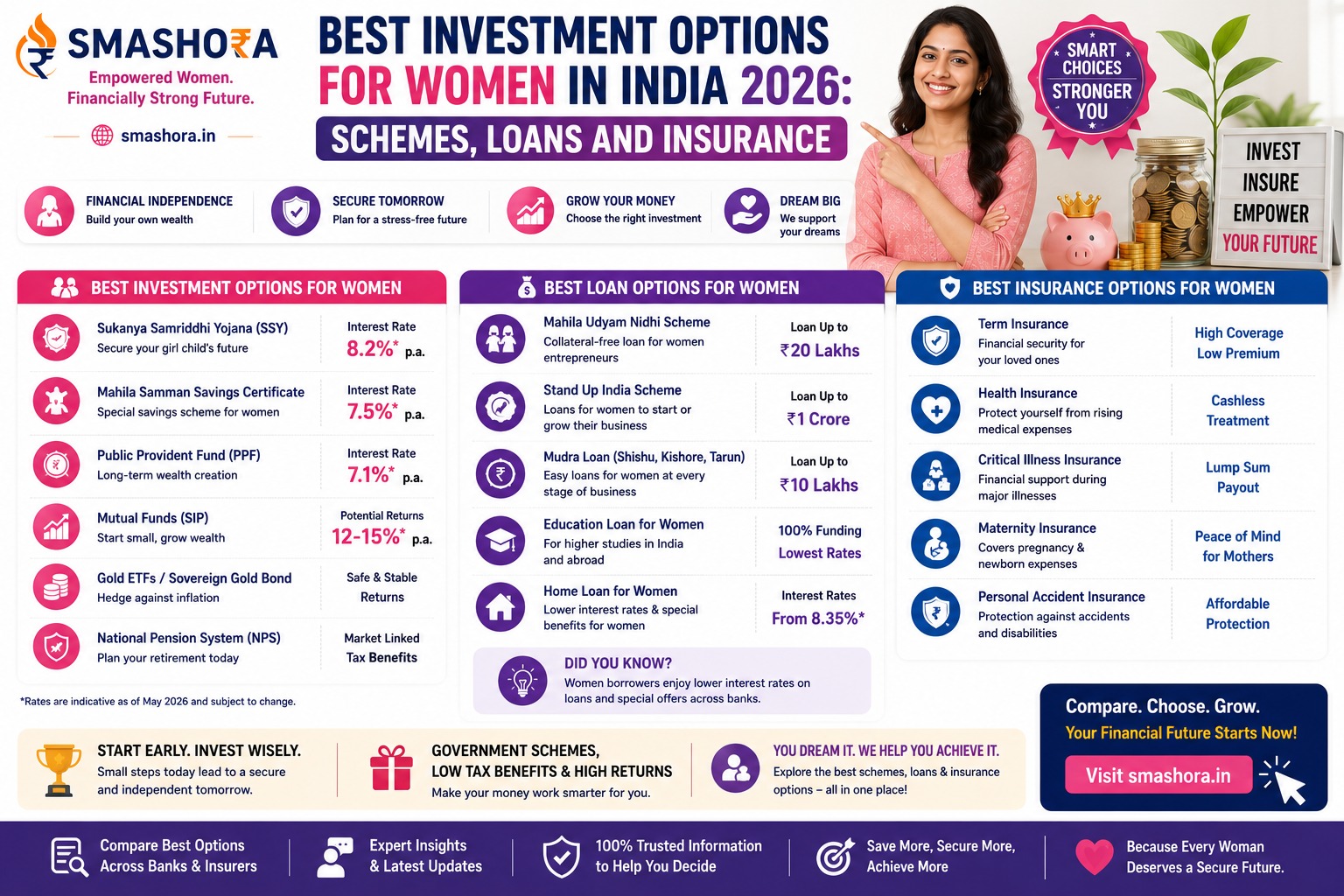
- 3.6 6. Sukanya Samriddhi Yojana — For Parents of Girl Children
- 4 Retirement Planning in India 2026 — Age-Wise Strategy
- 5 Retirement Income Strategies in India — What to Do After Retirement
- 6 How Much SIP Do You Need to Build a Retirement Corpus in India?
- 7 Retirement Planning in India 2026 — The Complete Investment Pyramid
- 8 Common Retirement Planning Mistakes Indians Make in 2026
- 9 Conclusion — Start Your Retirement Planning in India 2026 Today
- 10 Frequently Asked Questions
- 10.1 How much corpus do I need for retirement in India in 2026?
- 10.2 What is the best investment for retirement planning in India in 2026?
- 10.3 What should I do with my EPF when I change jobs?
- 10.4 How does NPS help in retirement planning in India in 2026?
- 10.5 At what age should I start retirement planning in India?
- 10.6 Should I prioritise paying off my home loan or investing for retirement?
Effective retirement planning in India 2026 is not just important — it is the only way to ensure genuine financial freedom after you stop working. India has no universal social security system for private sector workers. When you retire, your salary stops. The EPFO pension (EPS) pays a maximum of ₹7,500 per month — not nearly enough to cover basic living expenses in any Indian city in 2026. Your entire retirement corpus must be self-built through disciplined saving and investing across your working years. No one is going to build it for you.
The most dangerous mistake Indians make about retirement planning is treating it as something to think about at 50. By then, compounding has already lost its most powerful phase. A 25-year-old investing ₹5,000 per month at 8% per year builds approximately ₹1.15 crore by age 60. The same person waiting until age 35 to start builds only ₹47.87 lakh — less than half the corpus with just 10 years of delay. That 10-year cost is over ₹67 lakh in lost wealth, simply from starting late.
In 2026, retirement planning in India has become both more urgent and more accessible. NPS withdrawal rules were updated in 2026 allowing up to 80% lump sum withdrawal at retirement. Interest rates on government retirement schemes remain strong with SCSS at 8.2% and PPF at 7.1%. And equity markets continue to offer the highest long-term returns of any asset class available to Indian investors. This complete guide on retirement planning in India 2026 covers everything — how much corpus you need, the best investment tools, age-wise strategies, and a practical month-by-month action plan.
The Retirement Reality for Indian Private Sector Employees in 2026
Retirement planning in India 2026 is fundamentally different from most developed countries for one critical reason: there is no government pension for private sector workers. Here is the actual retirement income picture for most Indians:
| Retirement Income Source | Monthly Amount | Covers What? |
|---|---|---|
| EPFO Pension (EPS-95) | Maximum ₹7,500 per month | Barely covers groceries in 2026 |
| EPF corpus withdrawal | One-time lump sum at retirement | Typically covers 5 to 8 years of expenses |
| Government pension | Only for government employees | Not available to private sector workers |
| Self-built corpus (NPS, PPF, ELSS, SIP) | Depends entirely on your savings rate | Must fund the remaining 20 to 30 years |
For a typical private sector employee retiring at 60 in India 2026, the gap between what EPF and EPS provide and what is actually needed for a comfortable 25 to 30-year retirement is enormous. Retirement planning in India 2026 is essentially about closing that gap through 25 to 35 years of disciplined investing in the right instruments.
How Much Retirement Corpus Do You Need in India in 2026?
This is the most important question in retirement planning in India 2026. Most Indians either underestimate what they need or calculate it without accounting for inflation. Here is the right framework:
Step 1 — Calculate Your Current Monthly Expenses
Start with your current total monthly household expenses — rent or home loan EMI, groceries, utilities, transport, school fees, entertainment, insurance premiums, and everything else. This is your baseline monthly expense figure.
Step 2 — Estimate Your Retirement Monthly Expenses
Your retirement monthly expenses will be different from today. Some expenses disappear (home loan EMI if paid off, children’s school fees), some are reduced (commuting costs), and some increase significantly (healthcare expenses which tend to grow substantially after age 60). A reasonable estimate is that retirement expenses are 70% to 80% of your current monthly expenses — but adjusted for inflation.
Step 3 — The Inflation Adjustment (Most Critical Step)
This is where most retirement planning in India 2026 calculations go wrong. India’s average consumer price inflation has been approximately 5% to 6% per year. At 6% inflation, ₹1 lakh per month in today’s money becomes approximately:
| Years to Retirement | What ₹1 Lakh/Month Today Becomes (at 6% inflation) |
|---|---|
| 10 years | ₹1.79 lakh per month |
| 15 years | ₹2.40 lakh per month |
| 20 years | ₹3.21 lakh per month |
| 25 years | ₹4.29 lakh per month |
| 30 years | ₹5.74 lakh per month |
Retirement planning in India 2026 based on today’s expenses without inflation adjustment leads to a dangerous underestimation of the corpus needed.
Step 4 — Apply the 25x Rule to Calculate Your Target Corpus
The 25x rule is the most practical framework for retirement corpus calculation in India 2026. Your retirement corpus should be 25 times your annual post-retirement expenses. This assumes your corpus earns a real return (above inflation) of about 4% per year and needs to last at least 25 years.
Formula: Required Corpus = Annual Post-Retirement Expenses x 25
| Current Monthly Expenses | Retirement Monthly Expenses (30 years, 6% inflation) | Annual Post-Retirement Need | Required Corpus (25x) |
|---|---|---|---|
| ₹40,000 | ₹2.30 lakh | ₹27.6 lakh | ₹6.9 crore |
| ₹60,000 | ₹3.44 lakh | ₹41.3 lakh | ₹10.3 crore |
| ₹80,000 | ₹4.59 lakh | ₹55.1 lakh | ₹13.8 crore |
| ₹1,00,000 | ₹5.74 lakh | ₹68.9 lakh | ₹17.2 crore |
These numbers may feel large but they are achievable with early starts and disciplined investing. A 25-year-old investing ₹25,000 per month in equity SIPs at 12% annualised returns builds approximately ₹8.7 crore by age 60 — without ever increasing the investment amount. Starting early and staying invested is the most powerful retirement planning tool available in India 2026.
The Best Investment Tools for Retirement Planning in India 2026
Effective retirement planning in India 2026 uses multiple investment tools, each serving a specific purpose in your retirement portfolio:
1. EPF — Your Mandatory Foundation
If you are a salaried employee at a company with 20 or more employees, EPF is mandatory. Your 12% of basic salary contribution plus your employer’s 12% contribution (though only 8.33% goes to EPF, the rest to EPS pension) builds your EPF corpus automatically.
- Current EPF interest rate: 8.25% per year (for FY 2024-25)
- Tax: Tax-free on withdrawal after 5 continuous years of employment
- Your role: Make sure you do not withdraw EPF when changing jobs — transfer it via EPFO portal. Many Indians lose lakhs by withdrawing EPF at every job change.
2. NPS — Additional Tax-Efficient Retirement Savings
The National Pension System is the most tax-efficient additional retirement vehicle for private sector employees. With the 2026 rule update allowing 80% lump sum withdrawal at retirement (up from 60%), NPS has become significantly more flexible.
- Tax benefit: ₹2 lakh total deduction per year — ₹1.5 lakh under 80C plus exclusive ₹50,000 under 80CCD(1B)
- Returns: 10% to 14% on equity-heavy portfolios (historical)
- Exit at 60: 80% lump sum tax-free, 20% mandatory annuity for monthly pension
- Best allocation for age below 50: 75% equity (Asset Class E), 25% government securities
For a complete guide on NPS including how to open an account, fund manager selection, and the exclusive 80CCD(1B) benefit, read our detailed article on NPS vs PPF in India 2026.
3. PPF — Guaranteed Tax-Free Foundation
PPF is the guaranteed, completely risk-free layer of your retirement portfolio. At 7.1% tax-free with EEE treatment, PPF’s ₹1.5 lakh annual investment over 30 years builds approximately ₹1.54 crore completely tax-free — a powerful safe component of any retirement plan.
- Investment: Maximum ₹1.5 lakh per year (qualifies for 80C deduction)
- Returns: 7.1% per year, government-guaranteed
- Tax: EEE — completely tax-free at all stages
- Strategy: Invest ₹1.5 lakh every April 1 (first day of financial year) to maximize interest computation
4. ELSS Mutual Funds — Tax-Saving Equity Growth Engine
ELSS funds serve double duty in retirement planning in India 2026 — they give you 80C tax deduction while simultaneously providing equity market growth rates of 11% to 14% per year historically. With a 3-year lock-in (shortest among 80C instruments), ELSS funds let you participate in India’s equity growth story while saving tax.
- Investment: Up to ₹1.5 lakh per year for 80C benefit
- Returns: 11% to 14% CAGR historically
- Lock-in: 3 years per SIP instalment
- Tax: 10% LTCG above ₹1.25 lakh per year on redemption
5. Equity SIP Beyond Tax-Saving Instruments
For building the large corpus needed for retirement planning in India 2026, equity SIPs beyond the 80C limit are essential for most investors. Nifty 50 index funds and large-cap equity funds have historically delivered 10% to 14% CAGR over 10 to 20 year periods — the only investment category that consistently and significantly beats inflation over long horizons.
Read our complete guide on the best SIP to start in India 2026 for specific fund recommendations across different risk profiles.
6. Sukanya Samriddhi Yojana — For Parents of Girl Children
If you have a daughter below age 10, SSY at 8.2% tax-free (higher than PPF) should be part of your family’s long-term financial plan — not just for your daughter’s education and marriage, but as it directly reduces the financial burden on you at retirement age when these expenses would otherwise compete with your retirement savings. For complete details on government schemes, read our guide on the best government savings schemes in India 2026.
Retirement Planning in India 2026 — Age-Wise Strategy
In Your 20s (Age 22 to 30) — The Foundation Phase
This is the most powerful decade for retirement planning in India 2026. Every rupee invested at 25 is worth approximately 8 to 10 times more at retirement than the same rupee invested at 45, because of compounding over a longer period.
Priority actions:
- Ensure EPF is active and do not withdraw it when changing jobs
- Build a 3 to 6 month emergency fund first
- Start a Nifty 50 index fund SIP — even ₹2,000 to ₹3,000 per month
- Open a PPF account and start contributing whatever you can
- Buy term insurance early — premiums are lowest in your 20s
- Do not get distracted by F&O trading, crypto, or stock tips
Target allocation at age 25: 80% equity (SIP in index funds and ELSS), 20% debt (PPF)
In Your 30s (Age 30 to 40) — The Acceleration Phase
Your income is likely growing in your 30s. This decade is where retirement planning in India 2026 needs to shift from “whatever I can save” to “structured, target-based investing.”
Priority actions:
- Maximise 80C at ₹1.5 lakh per year through EPF, ELSS, and PPF
- Add NPS under 80CCD(1B) for the extra ₹50,000 tax deduction
- Increase your equity SIP amount with every salary increment
- If you have a home loan, do not over-prepay at the expense of retirement investments — at today’s home loan rates, SIP returns often exceed your loan interest rate
- Review insurance coverage — term insurance cover should be at least 10x to 15x annual income
Target allocation at age 35: 70% equity, 30% debt (PPF, NPS debt component)
In Your 40s (Age 40 to 50) — The Peak Earning Phase
Most Indians reach their peak earning years in their 40s. This is the decade to maximise contributions and reduce unnecessary lifestyle inflation that erodes savings.
Priority actions:
- Maximise all retirement contributions — EPF, NPS, PPF all at maximum
- Start systematically shifting from equity SIP to a balanced portfolio as you approach 50
- Evaluate your retirement corpus progress — are you on track for the 25x target?
- Health insurance becomes critical — premiums are still manageable at 40, much higher at 50
- Begin educating yourself about post-retirement income strategies (SWP, annuities, SCSS)
Target allocation at age 45: 60% equity, 40% debt
In Your 50s (Age 50 to 60) — The Pre-Retirement Phase
This decade is about protecting what you have built as much as growing it further. Retirement planning in India 2026 for people in their 50s means gradually de-risking the portfolio.
Priority actions:
- Gradually reduce equity allocation and move toward debt instruments
- Pay off all EMIs — no home loan, car loan, or personal loan should ideally remain at retirement
- Maximise NPS contributions for the final years before 60 — it will be your largest retirement income source besides EPF
- Plan your post-retirement income strategy — which instruments will you withdraw from, in what order, and at what rate
- Reassess health insurance — upgrade to a higher sum insured if current cover is inadequate
Target allocation at age 55: 40% equity, 60% debt
Retirement Income Strategies in India — What to Do After Retirement
Building a retirement corpus is one part of retirement planning in India 2026. Knowing how to withdraw it efficiently to generate monthly income without running out of money is equally important.
Senior Citizen Savings Scheme (SCSS)
At retirement, deploy up to ₹30 lakh in SCSS at 8.2% per year — the highest guaranteed rate from any government instrument available to retirees. This generates approximately ₹20,500 per month in quarterly payouts as a stable, risk-free income base.
Post Office Monthly Income Scheme (POMIS)
Deploy up to ₹9 lakh (or ₹15 lakh jointly) in POMIS at 7.4% for monthly income of approximately ₹5,550 per month with no market risk.
Systematic Withdrawal Plan (SWP) from Equity Mutual Funds
Keep a portion of your retirement corpus in balanced or conservative hybrid mutual funds and set up a Systematic Withdrawal Plan (SWP) for monthly income. Unlike a fixed deposit, a SWP draws from a corpus that continues to grow — at the right withdrawal rate (4% per year or below), the corpus can last 25 to 30 years without depletion.
NPS Annuity
The mandatory 20% NPS annuity at retirement generates a fixed monthly pension for life. The annuity rate depends on the annuity plan chosen and current interest rates at retirement — typically ₹5,000 to ₹7,000 per month per ₹10 lakh in annuity corpus.
How Much SIP Do You Need to Build a Retirement Corpus in India?
| Current Age | Target Corpus (₹5 crore) | Required Monthly SIP (at 12% returns) | Target Corpus (₹10 crore) | Required Monthly SIP (at 12%) |
|---|---|---|---|---|
| 25 years (35 years to retire) | ₹5 crore | ₹3,450 per month | ₹10 crore | ₹6,900 per month |
| 30 years (30 years to retire) | ₹5 crore | ₹6,100 per month | ₹10 crore | ₹12,200 per month |
| 35 years (25 years to retire) | ₹5 crore | ₹11,000 per month | ₹10 crore | ₹22,000 per month |
| 40 years (20 years to retire) | ₹5 crore | ₹20,000 per month | ₹10 crore | ₹40,000 per month |
| 45 years (15 years to retire) | ₹5 crore | ₹38,000 per month | ₹10 crore | ₹76,000 per month |
The table above powerfully illustrates why early retirement planning in India 2026 is so critical. A 25-year-old needs ₹3,450 per month to build ₹5 crore by retirement. A 40-year-old starting the same journey needs ₹20,000 per month for the same result. Every decade of delay roughly triples the required monthly investment.
Retirement Planning in India 2026 — The Complete Investment Pyramid
The most effective retirement planning in India 2026 uses a pyramid structure — starting with the safest foundation and building growth layers on top:
| Layer | Instrument | Purpose | Allocation (Age Below 40) |
|---|---|---|---|
| Foundation (Safety) | EPF, PPF, NPS (debt component) | Guaranteed, risk-free base | 20% to 30% of retirement savings |
| Growth (Returns) | Equity SIP, ELSS, NPS (equity component) | Beat inflation, build large corpus | 60% to 70% of retirement savings |
| Protection (Insurance) | Term insurance, health insurance | Protect corpus from being wiped by catastrophic events | Premium is the cost, not an allocation |
| Emergency Buffer | Liquid fund, high-interest savings account | Prevent forced corpus liquidation during emergencies | 3 to 6 months expenses kept separate |
Your term insurance is a critical component of any retirement plan — if you pass away before retirement, your family’s financial future should be secured. Read our guide on the best term insurance plans in India 2026 to understand exactly how much cover you need based on your retirement corpus building stage. And the emergency buffer that sits outside your retirement corpus is covered in our guide on how to build an emergency fund in India.
Common Retirement Planning Mistakes Indians Make in 2026
Withdrawing EPF When Changing Jobs
This is the single most damaging retirement planning mistake made by Indians. EPF withdrawn at a job change is typically spent rather than reinvested. Transferring your EPF via the EPFO portal to your new employer’s PF account takes 15 minutes and preserves years of compounding. Never withdraw EPF unless you have been unemployed for 2 months and have no other option.
Treating Real Estate as Retirement Planning
Many Indians consider owning 2 to 3 properties as their retirement plan. Real estate is illiquid — you cannot sell one room of your house when you need ₹50,000 for a medical bill. Generating regular retirement income from real estate is complicated by tenant issues, maintenance costs, and market conditions. Real estate can be part of a portfolio but should not be the primary retirement corpus instrument.
Not Accounting for Healthcare Inflation
Medical inflation in India runs at approximately 14% per year — more than double general inflation. A knee surgery costing ₹3 lakh today costs approximately ₹7 lakh in 10 years and ₹16 lakh in 20 years. Good retirement planning in India 2026 includes a substantial health insurance cover that increases with age, plus a dedicated healthcare corpus within the overall retirement fund.
Underestimating Retirement Duration
Life expectancy in India is increasing rapidly. A healthy 60-year-old in 2026 can reasonably expect to live to 80 to 85 or beyond. Planning for only 15 years of retirement (to age 75) when you may live to 85 or 90 creates a severe corpus shortfall in your final years. Always plan for at least 25 to 30 years of post-retirement expenses.
Conclusion — Start Your Retirement Planning in India 2026 Today
Retirement planning in India 2026 is not complicated — it requires four things: an early start, consistent investing, the right instruments, and the discipline to stay invested through market volatility. Start with EPF and PPF as your guaranteed foundation. Add NPS for the exclusive ₹50,000 extra tax deduction and equity growth. Build your primary corpus through monthly equity SIPs in Nifty 50 index funds and ELSS. Protect everything with term and health insurance. And build an emergency fund to ensure you never have to liquidate retirement investments for short-term needs.
The numbers are clear from every retirement planning model in India 2026: every year you wait increases the required monthly investment by 15% to 25% to reach the same corpus. The best action you can take for your retirement today is not to find the perfect investment — it is to start investing in a good one immediately. Start your SIP today, increase it every year with your salary increment, and let 25 to 30 years of compounding do the work.
At Smashora, our mission is to help every Indian make every rupee count — including every rupee you invest toward the retirement you deserve. If this guide on retirement planning in India 2026 helped you see your financial future more clearly, leave a comment below or share it with a colleague who keeps putting off thinking about retirement.
Frequently Asked Questions
How much corpus do I need for retirement in India in 2026?
The 25x rule is the most practical framework for retirement planning in India 2026. Multiply your expected annual post-retirement expenses (adjusted for inflation to the year of retirement) by 25 to get your target corpus. For someone with ₹60,000 in current monthly expenses retiring in 25 years, the inflation-adjusted monthly expense becomes approximately ₹2.57 lakh per month — requiring an annual expense of ₹30.9 lakh and a corpus of approximately ₹7.7 crore. This number can be achieved with consistent equity SIP investing starting in your 30s at reasonable monthly amounts.
What is the best investment for retirement planning in India in 2026?
There is no single best instrument — effective retirement planning in India 2026 uses a combination. EPF is your mandatory foundation. PPF at 7.1% tax-free is your guaranteed savings layer. NPS gives you equity growth with the exclusive ₹50,000 extra tax deduction. Equity SIPs in Nifty 50 index funds are your primary long-term wealth creation engine. ELSS mutual funds give you 80C tax saving with equity returns. The combination of these instruments — weighted toward equity in your younger years and gradually shifting to debt as you approach retirement — is the most effective retirement planning strategy for most Indian salaried professionals.
What should I do with my EPF when I change jobs?
Always transfer your EPF to your new employer’s PF account — never withdraw it. EPF transfer can be done entirely online through the EPFO member portal using your UAN (Universal Account Number) and Aadhaar-linked mobile OTP. The transfer request is typically processed within 15 to 20 working days. Withdrawing EPF at every job change is the most common and damaging retirement planning mistake made by Indians. EPF withdrawn before 5 continuous years of employment is also fully taxable as income, making it even more expensive to withdraw early.
How does NPS help in retirement planning in India in 2026?
NPS serves multiple functions in retirement planning in India 2026. It is the only retirement instrument that gives you a deduction beyond the ₹1.5 lakh 80C limit — the exclusive ₹50,000 80CCD(1B) deduction saves ₹15,600 per year in taxes for 30% slab investors. It provides equity market growth through Asset Class E allocation — historically 10% to 14% per year. At retirement (age 60), the 2026 updated rules allow up to 80% lump sum withdrawal tax-free, with only 20% mandatory annuity for monthly pension. Over a 30-year career, NPS combined with EPF and PPF can build the majority of a private sector employee’s retirement corpus.
At what age should I start retirement planning in India?
The ideal age to start retirement planning in India 2026 is as soon as you start earning — typically age 22 to 25. At this age, your salary is lowest but the compounding period is longest — a ₹3,500 monthly SIP started at 25 can build ₹5 crore by retirement, while the same goal at 35 requires ₹11,000 per month. If you are in your 30s or 40s and have not started, start immediately — every year of delay increases the required monthly investment substantially. There is no age at which it is too late to start, but the earlier you begin, the lower the monthly amount required to reach the same corpus target.
Should I prioritise paying off my home loan or investing for retirement?
This depends entirely on the interest rate comparison. If your home loan rate is 8.5% and your equity SIP has historically returned 12% CAGR, investing in SIPs is mathematically better than prepaying the home loan — every ₹10,000 prepaid saves you 8.5% while the same ₹10,000 invested in equities has historically earned 12%. However, this assumes you can handle the psychological stress of carrying a loan while your investments fluctuate. A practical balanced approach for retirement planning in India 2026: maintain your regular home loan EMI, maximise all tax-saving retirement investments (EPF, NPS, PPF, ELSS) first, and use any additional surplus for partial home loan prepayments or additional SIPs depending on your remaining loan tenure and rate.